Post-Brexit Trade: Navigating New Hurdles After EU Exit
"The cost of sovereignty is often measured in the friction of moving goods across borders."
The United Kingdom is currently navigating a complex transition where the desire for regulatory independence meets the hard reality of economic friction.
As the dust settles on years of political upheaval, the structural shifts in British trade are moving from theoretical debates to measurable economic outcomes.
* Trade Friction: The transition from frictionless EU membership to a third-country status has introduced permanent regulatory hurdles. * Growth Dynamics: While the UK has maintained growth, official projections suggest long-term productivity trade-offs compared to staying in the EU. * Global Pivot: The UK is actively seeking new trade corridors to offset the loss of integrated European market access.
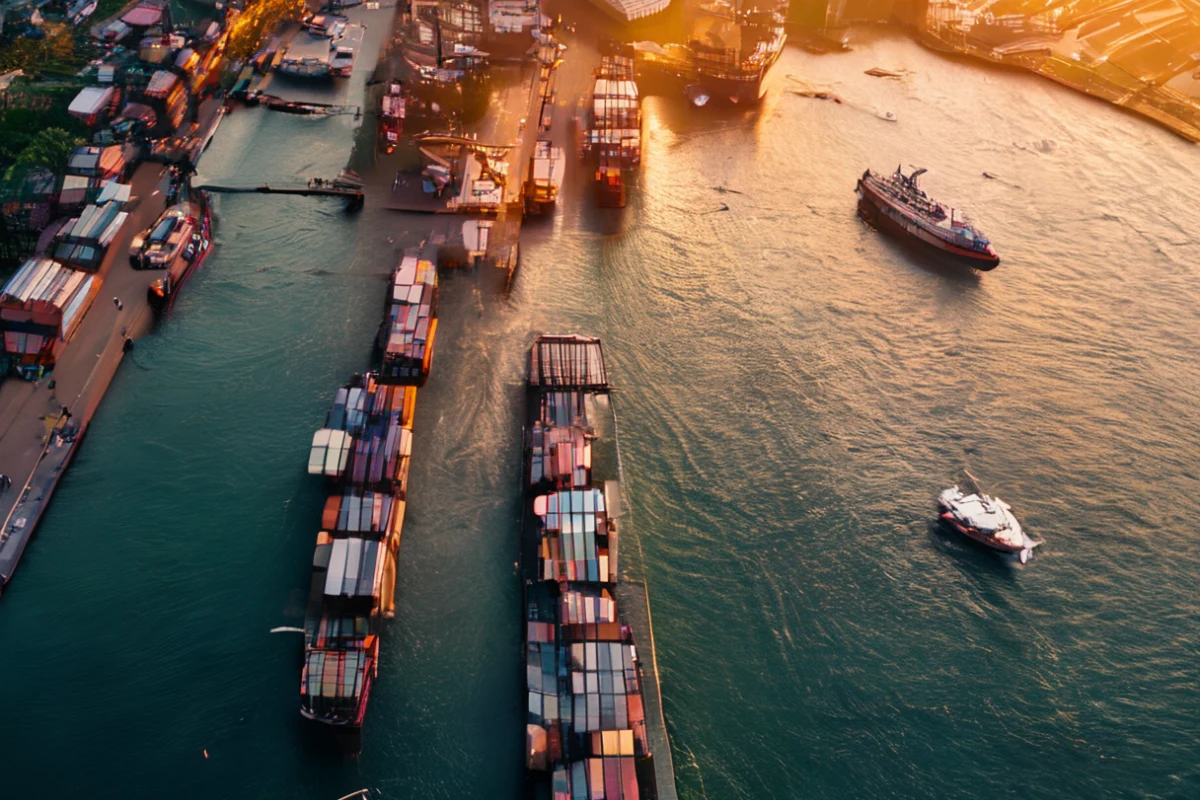
What did trade look like before Brexit? A rainy Tuesday in London, 2015, sees a logistics manager staring at a spreadsheet of seamless shipments moving from Dover to Calais without a single customs form in sight. This was the baseline for decades of European integration.
Before the political shifts began, the scale of trade within the European Union was massive. For instance, the European Union's services trade surplus grew from $16 billion in 2000 to more than $250 billion in 2018.
This massive expansion provided a stable, frictionless environment for British businesses to operate as part of a single economic bloc. The relationship dynamics prior to 2016 were defined by the "four freedoms": the movement of goods, services, capital, and people.
This allowed the UK to function as a global hub while enjoying the benefits of the single market.
The ease of moving goods across borders created a level of efficiency that is difficult to replicate through new treaties. The initial drivers behind the referendum sentiment often centered on regaining control over these moving parts, specifically regarding immigration and domestic law-making.
But how did that ease of movement turn into a logistical nightmare?

How did the transition period shock the economy? A shipping container sits idle at a port in 2021, the driver checking his watch as new paperwork requirements create a bottleneck that didn't exist three years prior. The transition period turned theoretical risks into daily operational headaches.
The economic projections following the referendum were stark.
A British government Brexit analysis, which was leaked in January 2018, indicated that British economic growth could be stunted by between 2% and 8% over the 15 years following the departure, depending on the specific scenario that unfolded.
These figures highlighted the potential cost of moving away from the single market. During the transition, businesses faced sudden regulatory divergence and new quota adjustments. The mismatch between old habits and new rules created a period of intense uncertainty.
While some industries adapted quickly, others faced significant cost increases due to new customs checks and administrative burdens. The gap between the projected growth and the reality of new trade barriers became a central theme for policymakers.
The transition was difficult, but the current reality is even more complex.
The Current State: Navigating New Trade Realities
A small manufacturer in the Midlands looks at a rising invoice for export documentation, realizing that "just-in-time" delivery is becoming much harder to manage. The current reality is one of managed friction.
The current operational landscape is defined by the Trade and Cooperation Agreement (TCA). While this agreement prevents tariffs on most goods, it does not eliminate the "non-tariff barriers" like customs declarations, rules of origin, and sanitary checks.
These hurdles create a constant drag on trade speed.
Despite these challenges, the UK has shown resilience. According to World Bank data, the United Kingdom recorded GDP growth of 1.4% in 2025. This growth suggests the economy has found a new equilibrium, even if it is not the same level of efficiency seen during the height of EU integration.
| Feature | Pre-Brexit (EU Member) | Post-Brexit (TCA Era) |
|---|---|---|
| Customs Checks | Minimal/None | Required for almost all goods |
| Regulatory Alignment | Automatic via EU | Divergent (UK-specific) |
| Labor Mobility | Free movement | Visa-based/Restricted |
| Market Access | Full Single Market access | Limited to TCA terms |
The current trajectory shows an economy moving away from deep integration toward a more fragmented but sovereign trade model. But what are the long-term structural costs of this shift?
Why Is Productivity a Growing Concern?
A politician stands at a podium in Westminster, arguing that the current trade deals are a necessary price for own autonomy. The debate is no longer about whether to leave, but how to live with the consequences.
The road ahead is shaped by the long-term impact on productivity.
This is a significant structural concern for long-term economic health. Political sentiment remains divided. While some see the current arrangement as a stepping stone to better global deals, others view it as a permanent loss of economic momentum.
The legislative processes in Parliament continue to shape how much the UK diverges from EU standards in sectors like tech, environment, and finance. The tension between sovereignty and economic efficiency will likely be the defining political struggle of the next decade.
But is the UK looking elsewhere to solve this equation?

Beyond the UK-EU Divide: Global Trade Context
A trade envoy boards a plane headed for Tokyo, looking for new markets that can compensate for the complexities of European trade. The UK is looking far beyond the English Channel.
The UK's trade challenges are not happening in a vacuum; they are part of a global shift toward protectionism and regionalism. As the UK seeks new international agreements, it is attempting to pivot toward faster-growing markets in the Indo-Pacific and elsewhere.
This "Global Britain" strategy aims to offset the loss of European market depth with breadth in other regions. However, moving toward new markets involves different complexities.
While the EU provided a massive, unified consumer base, new deals often involve different standards and longer supply chains.
The success of this pivot depends on whether the growth in new markets can outpace the friction in the European market. The transition from a regional powerhouse to a global seeker of trade is a massive structural undertaking.
Whenever I look at trade data, I am reminded that moving goods is not just about moving boxes; it is about moving the lifeblood of an economy.
How to Navigate the New Trade Environment
For businesses operating in this new landscape, moving from the old way of doing things to the new requires a systematic approach. If you are managing a supply chain, consider this transition checklist:
- Audit Regulatory Requirements: Review all product specifications against current UK and EU standards to identify divergence.
- Update Customs Documentation: Ensure all rules of origin documentation is strictly maintained to qualify for zero-tariff status under the TCA.
- Evaluate Supply Chain Lead Times: Adjust "just-in-time" schedules to account for potential border delays and administrative bottlenecks.
- s. Assess Digital Integration: Invest in automated customs filing software to reduce manual error and administrative costs.
- Review Labor and Visa Compliance: If moving personnel across borders, ensure all visa requirements are met according to current immigration laws.
Summary of Key Data Points
- Growth Benchmark: The UK recorded 1.4% GDP growth in 2025 (World Bank).
- Productivity Risk: Potential 4% reduction in productivity due to the new trade deal (Office for Budget Responsibility).
- Growth Impact Projection: A 2–8% potential stunting of growth over 15 years (Leaked 2018 analysis).





Comments 0