Brexit Trade: Navigating New Hurdles After EU Separation
"Brexit has transitioned from a political referendum into a complex, operational reality, fundamentally reshaping the mechanics of UK-EU trade and regulatory alignment."
The transition from a frictionless single market to a negotiated trade relationship has introduced significant new hurdles for businesses moving goods across the English Channel.
While the political debate has largely settled into a new status quo, the economic reality involves constant adjustments to customs, rules of origin, and regulatory divergence.
* The shift from seamless membership to a negotiated relationship has introduced new friction points like customs checks and regulatory divergence. * Trade volumes continue to fluctuate, requiring granular analysis of pre- and post-TCA data to understand the true impact. * The relationship is characterized by a constant negotiation between sovereignty aspirations and practical economic integration realities.
How Did the Referendum Set the Stage for Today's Trade Reality?
A quiet polling station in a British suburb in 2016 changed the trajectory of European commerce forever. Voters walked into booths, cast their ballots, and effectively dismantled decades of integrated trade policy with a single pen stroke.
According to the United Kingdom European Union, 52 percent of those who voted supported Brexit in 2016.
The foundation of the current trade landscape was laid when the electorate voted to "Leave the European Union," with a majority of 1,269,501 votes (3.8%) over those who voted to "Remain a member of the European Union." This specific margin in the 2016 referendum provided the mandate for the UK to negotiate its withdrawal, moving away from the integrated structures of the past.
Before this decision, the UK operated within the European Union's single market, where goods and services moved with virtually no administrative interference.
The transition period following the referendum required moving from this level of deep integration toward the Trade and Cooperation Agreement (TCA). This shift meant moving from a system of shared rules to a system of managed boundaries.
The negotiations were not merely about moving borders but about redefining how two massive economic entities interact. The transition from being a member to being a "third country" meant that the legal frameworks governing trade had to be rebuilt from the ground up.

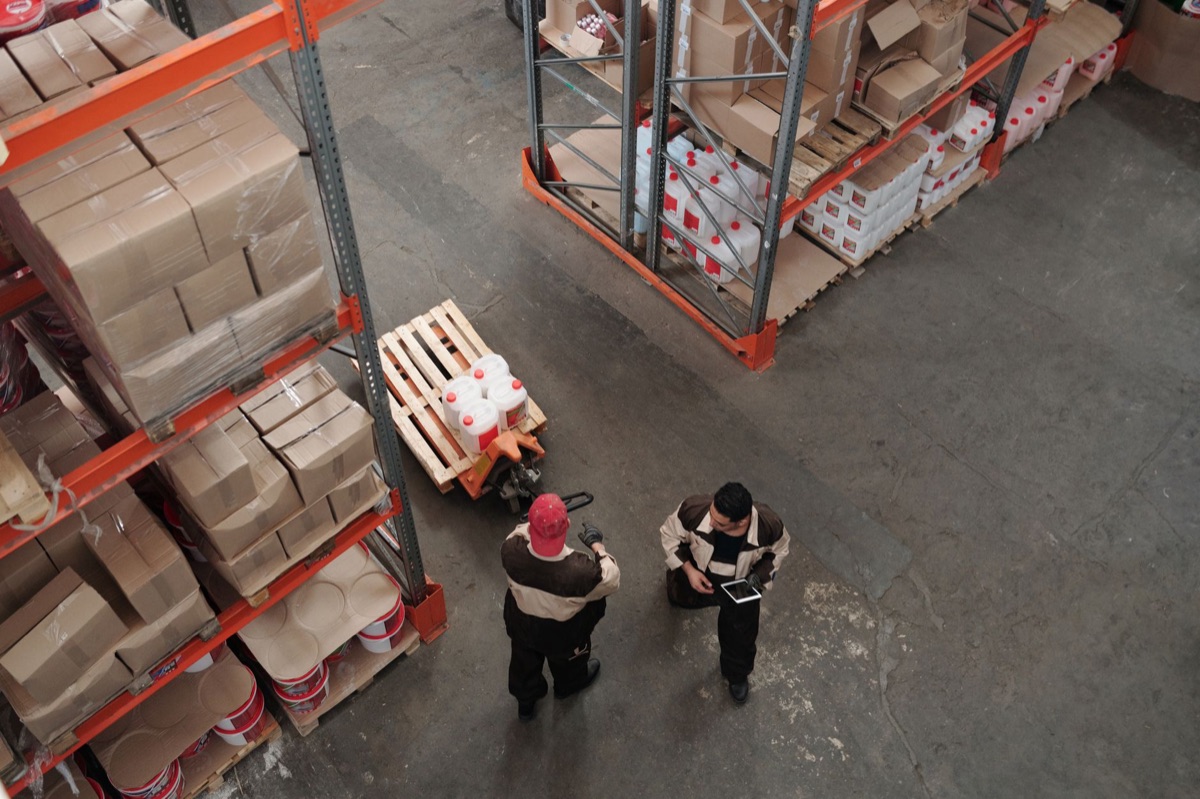
How has trade flow changed since the TCA? A shipping container sits idling at a terminal in Dover, waiting for paperwork that didn't exist five years ago. The driver checks his watch, knowing that the transit time to an EU warehouse has fundamentally changed.
As reported by the Foreign Press Association, Nigel Farage stated in 2009 that he had received £2 million in expenses over ten years.
To understand the current friction, one must look at the massive scale of the EU's economic influence. For context, the European Union's services trade surplus rose from $16 billion in 2000 to more than $250 billion in 2018.
This massive scale of trade makes the UK's departure a significant shift in the European economic landscape.
The transition has introduced practical realities for the movement of people and goods. While the TCA allows for trade without tariffs on most goods, it does not eliminate the need for customs declarations or the complexities of moving workers across borders.
Visa requirements for longer stays or specific work assignments have become a new layer of bureaucracy for businesses.
Specific sectors faced unique hurdles during the transition. For example, fishing quotas and maritime rights became a focal point of negotiations, illustrating how specific industries felt the direct impact of moving outside the EU's regulatory umbrella.
These shifts required businesses to develop entirely new logistics chains to manage the sudden appearance of borders.
What are the costs and benefits of trade friction? A small business owner in Manchester stares at a spreadsheet, calculating the cost of new customs brokerage fees. What used to be a simple delivery is now a series of digital filings and compliance checks. The electorate voted to Leave the European Union with a majority of 1,269,501 votes in 2016.
The new regulatory framework has introduced significant friction points. Even without direct tariffs on many goods, "rules of origin" requirements mean businesses must prove where every component of a product comes from to qualify for preferential treatment.
Customs checks and sanitary/phytosanitary (SPS) inspections for food products have added both time and cost to the supply chain.
Public opinion on these changes remains divided. While some see the new autonomy as a victory for sovereignty, others view the administrative burden as a heavy economic cost. The success of the TCA is viewed differently depending on whether one prioritizes political independence or ease of trade.
Macroeconomic indicators during the transition period have shown the complexity of this shift. While the UK sought to diverge from EU rules to foster growth, the divergence itself creates new barriers when trying to export to the European market.
The tension between seeking autonomy and maintaining market access remains the central economic challenge.
| Feature | Pre-Brexit (EU Membership) | Post-Brexit (TCA Era) |
|---|---|---|
| Customs Checks | Minimal to none | Required for almost all goods |
| Regulatory Alignment | Fully aligned with EU standards | Divergent (UK vs. EU standards) |
| Movement of People | Free movement of labor | Visa and work permit requirements |
| Rules of Origin | Not applicable within the single market | Crucial for tariff-free trade |
Beyond Trade: The Wider Political and Migratory Context
A crowded terminal at Heathrow captures the movement of people moving between the UK and the continent. Travelers now navigate different rules for residency and work than they did in the decade prior.
The transition period saw significant shifts in migration flows. The end of free movement changed how labor was sourced and how people moved between the UK and the EU. This has had ripple effects on various sectors, from hospitality to specialized technical industries.
Political sentiment regarding the future remains a moving target. While the referendum provided a clear direction, debates regarding potential future realignment or even re-entry into the EU occasionally resurface in political discourse.
The historical context of the 2016 vote continues to frame how current policy is perceived by the public.
The relationship is not just about goods; it is about the movement of ideas, people, and political influence.
The current landscape is a direct result of the 2016 decision to prioritize a different kind of sovereignty, which has fundamentally altered the social and political fabric of the UK-EU relationship.
The Future Trajectory: Navigating the Bilateral Relationship
A policy analyst sits in a London office, reviewing new regulatory papers. The task is to predict how much divergence can be managed before the cost of trade becomes prohibitive.
The future will likely be defined by the tension between regulatory alignment and divergence. If the UK chooses to diverge significantly from EU standards to suit its own industries, it may inadvertently create even higher barriers for its exporters.
Finding the "sweet spot" is the primary goal for policymakers.
Supply chains are also facing practical constraints. Companies must now account for non-EU sourcing and ensure that their products meet the specific requirements of both the UK and the EU markets.
This often requires maintaining two different sets of standards or managing complex "rules of origin" documentation.
Ultimately, the relationship requires sustained, professional dialogue. As the UK and the EU continue to settle into their new roles, the ability to manage this relationship constructively will determine the long-term economic stability of both parties. ### FAQ
Q: What was the initial driver for the trade changes? A: The changes were driven by the 2016 referendum where 52 percent of voters supported "Brexit," leading to the UK negotiating its withdrawal from the European Union and moving away from the single market.
Q: Are there still tariffs on goods moving between the UK and the EU? A: Under the Trade and Cooperation Agreement (TCA), many goods can be traded tariff-free, provided they meet specific "rules of origin" requirements to prove they were actually produced in the UK or EU.
Q: How has the movement of people changed? A: The transition ended the "free movement" of people. Now, moving for work or long-term stays often requires visas and adherence to specific immigration rules that did not exist during EU membership.
Q: Why are customs checks now necessary? A: Because the UK is no longer part of the EU single market or the customs union, it is considered a "third country." This necessitates formal border controls and documentation for goods moving between the two entities.




Comments 0